


Happy Blackboards: Anti-Thematic Script Analysis, or How to Teach Beyond "Themes"
Mackenzie L. Bounds
This may be controversial, but I cannot stand the word "theme." I mean, what does the word even mean? At the very least, what does it mean to you? The definition of "theme" varies so much across humanities classrooms that the word fails to consistently mean anything in our pedagogy. As a scholar of theatre and performance myself, I say the word "theme" is an infelicitous performative—and an undying one at that. Let's kill it off once and for all: I detest the word so much, in fact, that I have banned the word "themes" from my script analysis classroom. I invite you to join me beyond "themes," toward clearer, more consistent, and more productive pedagogical prompts. So, you may think of this essay first as a tongue-in-cheek manifesto against the use of the term "themes" in script analysis instruction, and secondly—and more importantly—an effective template that I have devised for moderating speedy and thorough analyses of plays in the drama classroom.
The Problem
While teaching Drama 101 and script analysis courses at the University of Washington and Florida State University, I have found that asking students to identify "themes" in assigned plays has been unproductive and time-consuming. I argue this is due to the unstable definition of the word "theme," which is an infelicitous performative that is frequently deployed by instructors across the humanities, yet its meaning varies between classrooms. When students are tasked with identifying "themes" in a given text, some students will give a one-word topical response—usually a simple, one-word noun like "race" or "love." For example, the student will say "race" is one "theme" of August Wilson's Joe Turner's Come and Gone. Other students, when prompted with identifying "themes," will generate a full question or dilemma the text seems to pose about a given topic. These students will say one "theme" of the play is "how does race influence family relationships?" Further, some students may take the prompt of identifying "themes" and generate full sentences that take the shape of political arguments the text seems to posit. These students will claim a "theme" to be something like "racism kills." Clearly, when we give students the task of identifying "themes," we invite student responses that range from single words to questions to statements. This flawed, unproductive prompt of "theming" in our pedagogy leads to student analyses that are inconsistently engaged and, for that matter, confused.
Imagine yourself as a confused undergrad in the present year and you type into Google: "what are themes?" You'll find the same inconsistencies in the first page of results. Some sites say a theme is a topic. Some sites say a theme is a central question. Some sites say a theme is an idea or a stance that the text takes. All of these are hardly the same thing, and yet they're all generated in response to the infelicitous utterance that is "theme." It's no wonder that student responses are inconsistent. In my teaching experience thus far, I have noticed that if an instructor wants consistently formatted responses from students, the word "theme" requires a course-specific definition provided by the instructor. Some instructors will specify that they want students to write the single-word responses, e.g., "one theme of this play is 'race'"; others will ask for the questions ("what is race?"); and the rest will ask for the statements/arguments like "racism kills." This is likely because of the slippery meaning of the term as it is deployed across humanities classrooms. In some classrooms, the word "theme" calls for a vague topic that the text engages with. In other classrooms, instructors task students with identifying themes, and what they mean by this is that they want students to infer the political claims being made (directly or indirectly) by the author.
In short, I argue that since the word "theme" consistently warrants redefinition, which takes up precious instruction time, and since it also fails to generate consistent and thorough student responses, the word "theme" ultimately fails as a prompting device in our pedagogy. In response, I have devised more specific and guiding prompts for students' script analyses, both for individual assignments and for group discussions in the classroom. This pedagogical move beyond themes leads students to better identify the ways that plays are always political, discursive media. We must show students that plays are not merely isolated thought exercises by any one playwright but intricately, deliberately woven rhetorical texts borne by entire ecologies of influence. Although this method is merely a semantic change from "themes" to other prompts, I have found that asking students to identify a play's topics, questions, and arguments instead of vaguely asking for its themes has saved a great deal of teaching time and student confusion—confusion that the word "theme" inevitably carries with it. Through this change, not only have my students found a much deeper engagement with the assigned plays, but the quality of the dramaturgical and practical work they produce in response to their script analyses is at a much higher level than before.

Fig. 1. The front of the worksheet.
My Solution, Step by Step
The pedagogical process I've devised for script analysis can be utilized in a classroom in two ways: one, as a form of independent work that students do on their own—a.k.a. a worksheet to be assigned as homework/a reader report (Fig. 1)—but it's also a format that does well to organize a play discussion in class, on the whiteboard or blackboard. On play discussion days in class, I've developed a habit of mapping out the template for this process on the board while my students take two to three minutes among themselves to sincerely react to the reading. My students have been calling the template that gets drawn on the board a "megamap" (Fig. 2). I've found that once students get used to this template, the process of filling out the megamap on the board quickens up each additional analytical discussion that would otherwise take much longer. Even better, the consistent format of this process over the course of several play discussions allows for deeper engagements with the plays in shorter amounts of teaching time. First, I sketch a megamap on the board (Fig. 1) while students discuss their initial impressions of the play. It is essentially a simplified version of the worksheet template, with five big columns spanning the board—the first and third columns subdivided slightly. Jotting this down never takes more than two minutes:
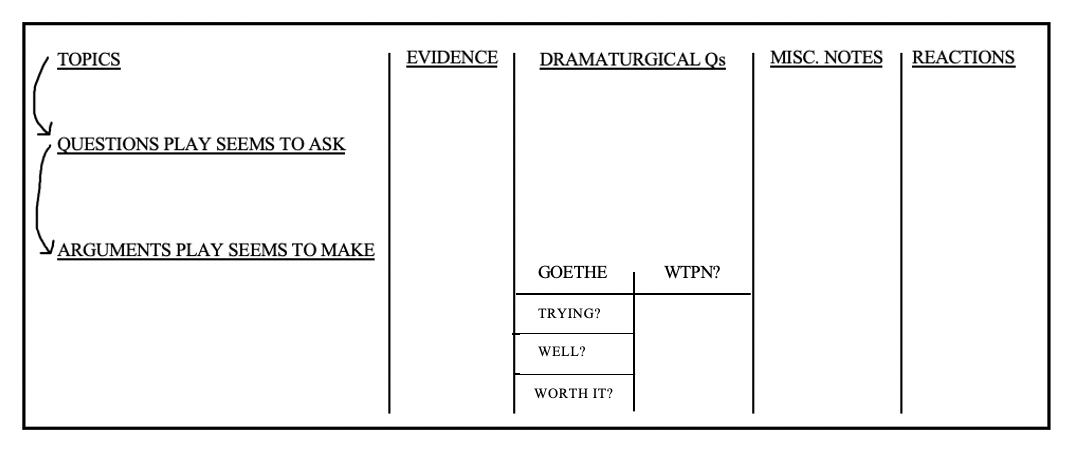
Fig. 2. How the "megamap" looks on the board.
On a play discussion day, we begin at the far right of the megamap. I typically cull sincere reactions and feelings about the play before doing anything else, writing those in the far right column. I tell students that their sincere reactions matter dramaturgically because if the play fails to make meaning for them in present day, the play (at least, in its current state) fails to be relevant. We return to these initial reactions later, when asking the ultimate dramaturgical questions like Goethe's Three (what is the play trying to do; does it do that thing well; is that thing worth doing) and Michael Chemers's "Why (or why not) this play now?"1 More on this momentarily.
After jotting down reactions at the far right of the megamap, we travel all the way to the first column on the left, which has three rows. Here begins our analysis. The first row of the column asks students to identify some topics within the play. I tell students that "topics" are those one- or two-word simple nouns that the text generally engages with. For example, some topics students might generate for Tony Kushner's Angels in America are "sexuality," "love," "disease," or "America." Some topics students might generate for Erika Dickerson-Despenza's cullud wattah are "environmental racism," "color," "law," "labor," "water," or "children." For each topic generated, I ask students to locate one moment in the play when the topic comes up (either directly or indirectly), and we put that moment in the "evidence" column immediately to the right. When students are filling out the megamap individually (as a worksheet), I ask them to identify at least three topics, but during in-class group discussions (on the board), we typically generate at least ten topics, all paired with something in the "evidence" column.
Once topics have been generated, students can use these one-word simple nouns as a foundation to infer questions the play seems to ask as well as arguments the play seems to make in the remaining two rows of the first column. I include the word "seems" in these prompts because I want to emphasize to students that not every inquiry or position a play poses is found verbatim within the text. That being said, one reason the "evidence" column exists next door is to weed out any offerings that aren't actually evidenced in the text, directly or indirectly. For the row about "questions the play seems to ask," examples from Angels in America might be: "Is it ethically OK to leave a dying lover?" or "How do prejudices like homophobia affect public health?" From there, a student would tie that question they generated to a moment in the script, and they'd quickly cite that moment's page or scene number in the "evidence" column. Just like with topics, when students are filling this out on their own (as a worksheet), I ask for just two to three entries in the remaining rows of the first column, each with short citations in the "evidence" column to match. I accept scene or page numbers as evidence for worksheets/homework, but for time's sake during class, I also accept brief notes like "when X happens" as proof. To help students brainstorm questions and arguments in class, I often point to the topics we already generated in the first row, and then I ask students, "What does this playwright seem to question or argue about X topic?" Let's say we are still reading Angels, and the topic I point toward here is "America." From this one word, students will generate short questions or arguments about America from the inferred perspective of the playwright, such as "the American dream is a harmful myth." If the topic I point to is "homophobia," students may generate the argument that "homophobia has material consequences, even death." As is the rule, students need to tie their inference about the play's questions or arguments to some kind of evidence from the text in the next column.
The last two rows of the first column help with teaching nuance, too. It's important to emphasize that plays don't necessarily make definitive claims about every topic they cover. I make sure to let students know that a play sometimes seems to pose a question without offering any kind of clear answer. This is major: All questions the play seems to ask and arguments the play seems to make should build on a word from the "topics" row, but not every entry in the "question the play seems to ask" row will necessarily correspond with a cut-and-dried answer in the "arguments the play seems to make" row. Further, if students struggle to generate questions the play seems to ask, it's sometimes productive to ask them to work backward from an argument the play seems to be making. To do this, point toward an argument that students have already located about a topic in the text, and then ask them what question(s) to which that argument may be a response. For example, if students take the topic "America" and generate "the American dream is a harmful myth" in the arguments row, then, working backward, students can generate a question the play seems to ask: "What is the American dream?" So long as the classroom begins by generating one-word topics, they can move back and forth between generating questions and arguments until all three rows are sufficiently full and discussed. For this pedagogical process, filling up the first column and its three rows and then pairing each entry with proof in the "evidence" column should take up much of the class time. Once all three rows of the first column are full and paired with evidence in the second column, I take a minute or two to review the students' findings and identify which topics generated the most questions and arguments and, further, which questions and arguments paired with the most evidence found in the text. This review process reveals to students where the play does its strongest rhetorical work, and I suggest to students that this might help them come up with final paper or final project ideas down the line.
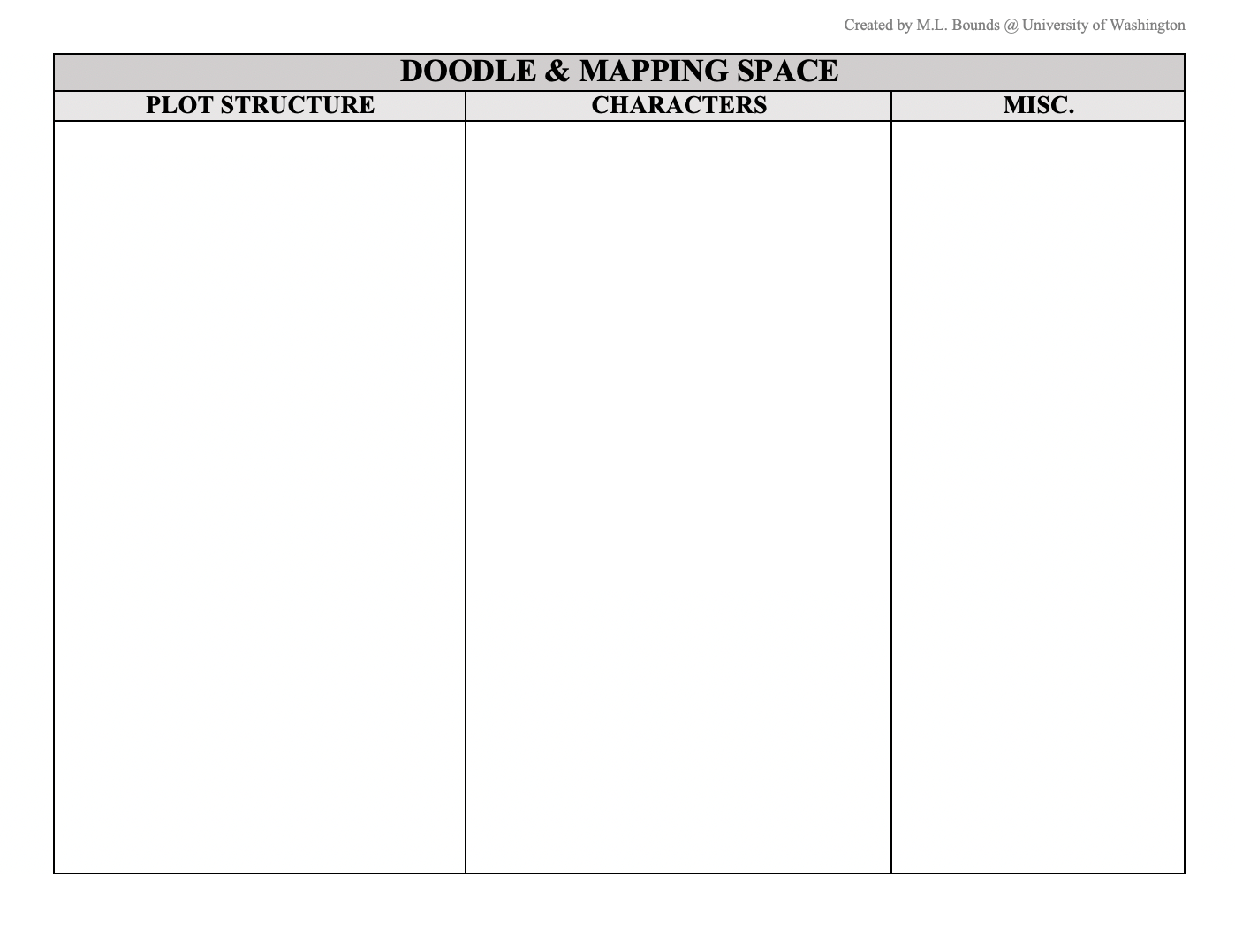
Fig. 3. The back of the worksheet.
As the course goes on, and depending on curricular objectives, I introduce additional columns for students to fill out, like a "dramaturgical questions" column, wherein students pose researchable questions about the play and its references (for Angels: "What is AIDS?" or "Who is Roy Kohn?" or "Who is Tony Kushner?"), or even questions about staging the play. Theatre majors quite like to list potential design problems here as production dramaturgy questions, such as "How do we stage X moment safely?" or "How do we aesthetically represent X without doing harm?" or "How do we create X special effect?" In the worksheet version of this process, in addition to a "dramaturgical questions" column there is a specific box that asks students to make observations about the "world of the play" because, early on, I have students read "EF's Visit to a Small Planet."2 There, students generate comments about the metaphysics of the play's world—the logic of its universe, how space and time and people "work" there, and so on. On the back of the worksheet (Fig. 3), there's also space for more visual annotations, like for character/family tree mapping (in my experience, students find this very useful for ancient plays like Antigone, where the play-before-the-play, i.e., family lore is critical information) and structural analyses of the play's form (students find this helpful in units on genre to show structural differences between a five-act melodrama and an episodic modern play like Sophie Treadwell's Machinal). In the classroom version of the megamap, I typically reserve a "miscellaneous" column for sketches like this, if we have time.
In both the classroom and worksheet versions of this process, I have students evaluate the rhetoric and overall relevance of the play using a combination of Goethe's Three questions and Chemers's "Why (or why not) this play now?" When students struggle to answer the latter, I remind them about their initial reactions to the play that we listed at the beginning of class. Let us say that the students read Brecht and Weill's The Threepenny Opera. If the students infer that what the play is trying to do is to radicalize them against the bourgeoisie (certainly), but really, all the play made them feel was "confused" and "bored," perhaps this play needs some dramaturgical work in order to pass the "why this play now?" test for this particular audience. In the classroom, we typically close our discussion with this conversation. See Figures 4 and 5 for what the megamap often looks like after a discussion session.
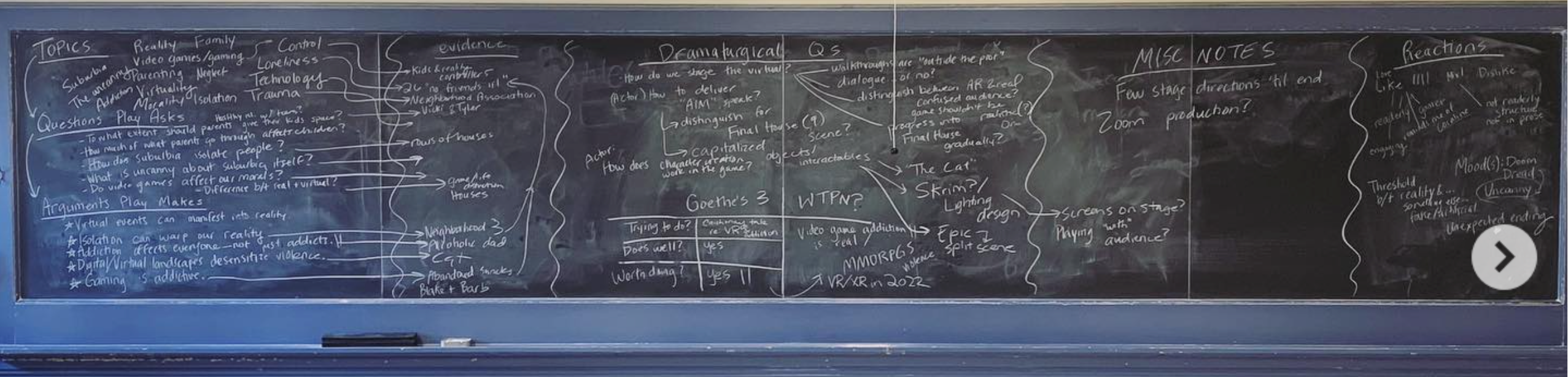
Fig. 4. Megamap with student-generated responses to Jennifer Haley's Neighborhood 3: Requisition of Doom. @happyblackboards Instagram: www.instagram.com/p/CkwHWKYyyDT/?img_index=1.
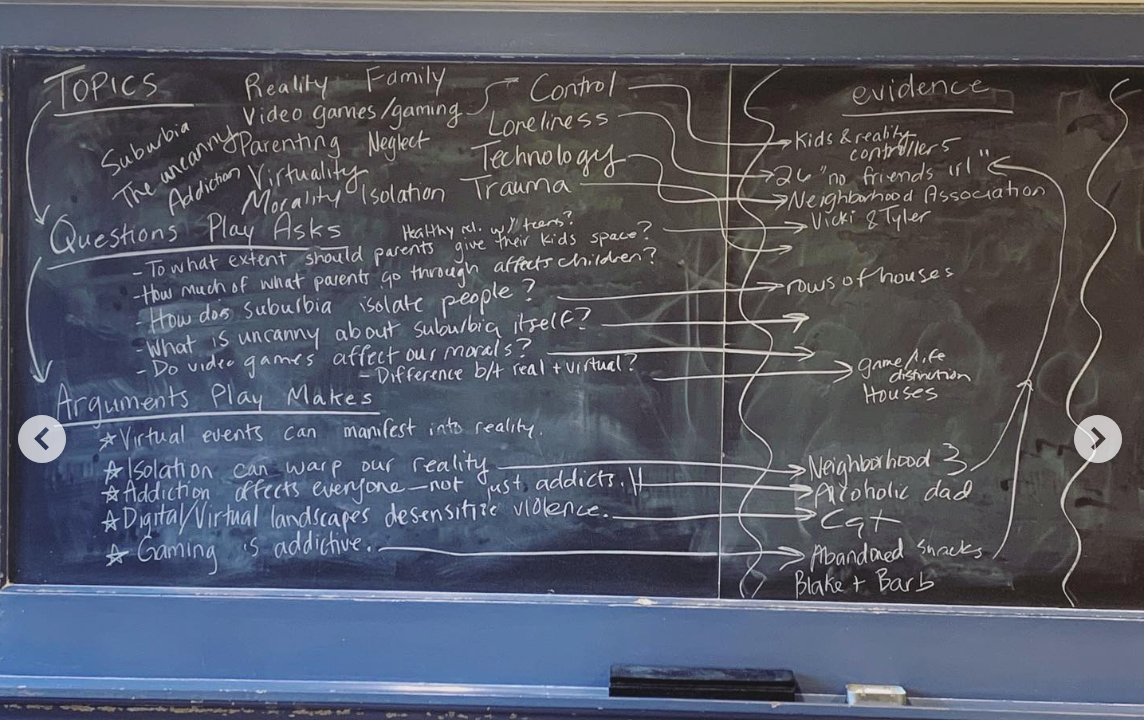
Fig. 5. Close-up on the topics/questions/arguments segment of the Neighborhood 3 megamap.
Why This Change Now?
I find it necessary to make the switch away from themes and toward topics, questions, and arguments because, for one, it better demonstrates to students how to identify a play's politics. In a post-2016 world of propaganda and fake news, the value of this skill cannot be understated. The word "theme" fails to explicate between a play's topics and the playwright's orientation toward those topics. This has disastrous potential. Following the vague and indirect pedagogy of "theming," students could very well be led to claim that two diametrically opposed plays have the same themes just because they engage the same topics: When prompted to compare two plays' themes, a student might be led to argue that The Octoroon, an 1859 racist melodrama by Dion Boucicault, and An Octoroon, the 2014 antiracist critique by Branden Jacobs-Jenkins, have the same themes by saying that they both engage the theme of "race." This obviously will not do.
The same students, when prompted to identify the topics, questions, and arguments of both plays (as opposed to their themes), will be compelled to move beyond that one-word—"race"—to explicate exactly what these playwrights seem to be doing with that topic, rhetorically. It encourages the student to think about the play as a discursive, political text, crafted by a three-dimensional author with a unique subject-positionality and a material political station. Of course, we can teach the students that the author is always already dead (thank you, Barthes), but even if dead, we must show students how the author is never truly absent. It's a small semantic change—away from themes and toward topics, questions, and arguments—but this little change shows that semantics matter when it comes to devising prompts for our students.
Furthermore—and I recognize that this may seem pessimistic, but nevertheless true—this process is designed with a healthy dose of cynicism regarding the students who don't read altogether. I find that avoiding the overused prompt of "themes" actually does work to redirect those students who are more inclined to Google "what are the themes of Mother Courage" than those who actually read the play. This pedagogical process I've devised invites students of that persuasion to at least connect the topics listed on sites like eNotes or Wikipedia to specific moments in the play text, as well as generate questions the playwright seems to be asking about those topics and arguments the playwright seems to be making about those topics. The latter two prompts are far less likely to be plagiarized since they avoid searchable clichés like the word "theme." For the same reason, this intuitive process would also make it especially hard for a student to rely entirely on AI programs like ChatGPT. So, even for the student who is cutting corners for whatever reason—and let us keep some compassion in mind for the students who may do this under some kind of duress—this process compels them to analyze some aspect of the play's topoi rather than simply list them, as these crowd-sourced sites and apps tend to do. Even if the student applies the least amount of effort required to complete the megamap, its process teaches critical thinking and college-level annotation skills.
Happy Blackboards
I know this is anecdotal evidence, but my students love this process. They tell me regularly that megamaps are the most effective way for them to internalize and break down these plays. Once I started using megamaps in the classroom on play discussion days, I noticed a curious trend: students were hanging around after class had already ended, their phones raised toward the board. When I asked them what they were doing, the students replied that they were taking pictures of the megamap so that when they were completing future assignments, they could keep a record of what the class came up with together. I thought that this was a great idea. If kept, the completed worksheet, or the completed megamap on the board after discussion, can also serve as a kind of archive of plays that the students have already read should they need to revisit these texts later for a final project or essay. Theatre majors may even hold on to them for use in their future careers as directors or designers or dramaturgs. So, I decided to save my students the trouble: I started the @happyblackboards Instagram account. I began taking pictures of the board after every play discussion day—not only for my students' convenience but for my own recordkeeping of my students' amazing, thoughtful ideas (Fig. 6). It doesn't hurt to share this account as I traverse the job market either. Through @happyblackboards, I maintain an archive of my pedagogy's day-to-day impact. The page catalogs my students' enthusiastic engagement and shows the depth of their analyses, and sometimes their thoughts about these dramas' present-day relevance influences my syllabus writing for future versions of the course. I am so proud to show off my students' findings there and so proud of this process that prompts students to engage deeper with these texts—beyond themes. For all these reasons, should the reader apply this process in their own classroom, I suggest that they share their "happy blackboards" too.

Fig. 6. Screenshot of the @happyblackboards Instagram page.
Notes
1. See Michael Mark Chemers, Ghost Light: An Introductory Handbook for Dramaturgy (Southern Illinois UP, 2010), pp. 108-20.
2. See Elinor Fuchs, "EF's Visit to a Small Planet: Some Questions to Ask a Play," Theater, vol. 34, no. 2, 2004, pp. 5-9, doi.org/10.1215/01610775-34-2-5.